

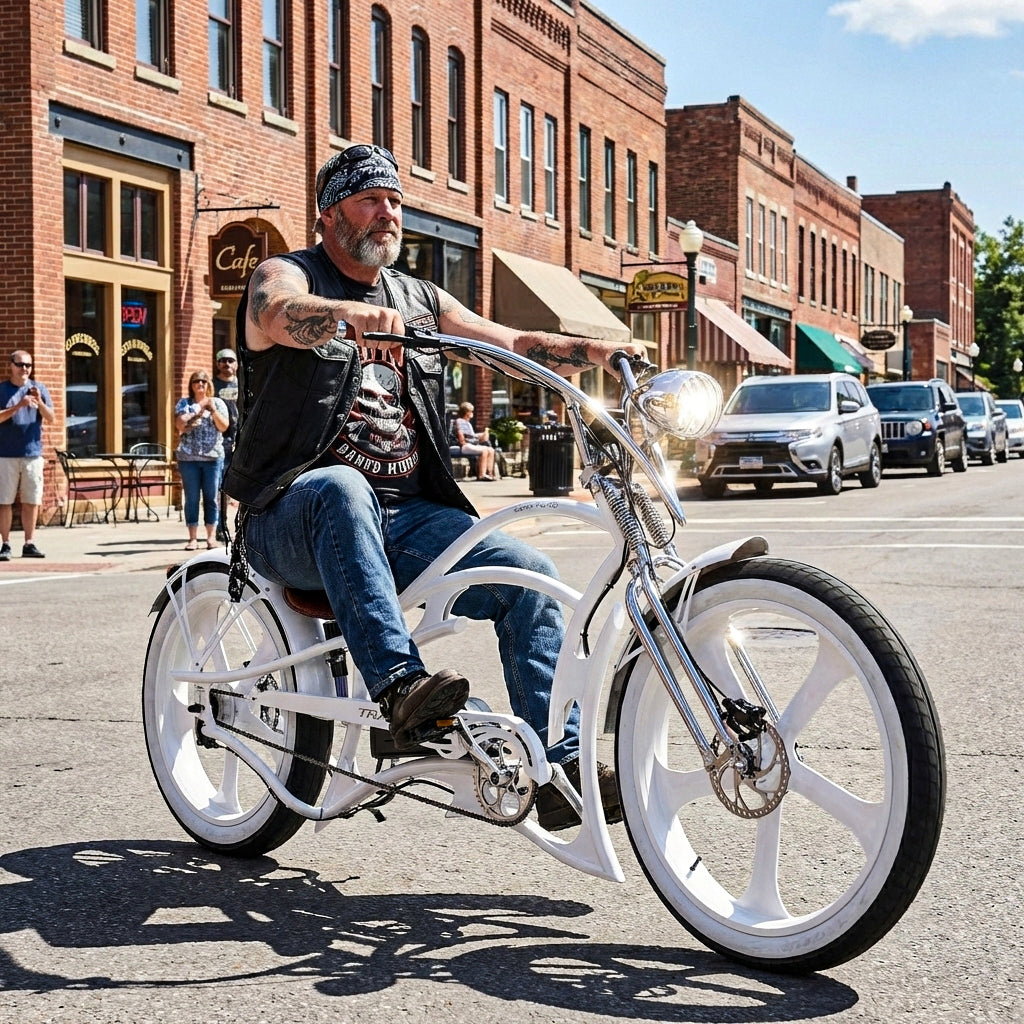

Electric Bikes (eBikes) are transforming how people commute, explore, and enjoy outdoor life. From students to families, they’ve become one of the fastest-growing personal transportation options in the U.S. and worldwide, with search interest for “two-seater eBike,” “passenger electric bike,” and “eBike for two adults” rising rapidly. Many riders now face a key question: Should I choose a two-seater eBike or a single-seater eBike?
This guide delivers a detailed, professional comparison—covering comfort, performance, battery life, safety, pricing, and real-world use cases—to help you select the perfect eBike that aligns with your lifestyle.
1. Core Differences Between Two-Seater and Single-Seater eBikes
Before deciding, it’s important to understand the main distinctions.
1.1 Two-Seater eBikes
Two-seater eBikes, also called tandem electric bicycles or electric bikes for two tandem, are designed to carry two riders simultaneously. They feature:
- Extended and reinforced frames
- Dual seating arrangements
- Higher weight capacity (usually 300–450 lbs)
- Stronger motors and batteries
- Stability-focused geometry
They are perfect for couples, friends, or family members who want to share the ride. Two-seater eBikes prioritize comfort, stability, and shared experiences over compactness or agility.
1.2 Single-Seater eBikes
Single-seater eBikes, also referred to as one seater electric bikes or electric commuter bikes, focus on individual mobility. They are typically:
- Lightweight and compact
- Quick and responsive
- Efficient for city commuting or solo leisure rides
- Easier to store and transport
Single-seater eBikes emphasize speed, agility, and independence.
2. Usage Scenarios
2.1 Ideal Scenarios for Two-Seater eBikes
- Couples riding together on weekends
- Parents transporting a child
- Leisurely cruising on boardwalks or parks
- Short trips and errands with shared capacity
- Delivery or light cargo transport
Two-seater eBikes transform riding into shared experiences, making trips safer and more enjoyable when riding with another person.
Extended Reading: For practical riding tips and maximizing comfort on stretch cruisers, check out Stretch Cruiser Riding Top Tips: A Complete Guide To Cruiser Gear Systems!
2.2 Ideal Scenarios for Single-Seater eBikes
- Daily commuting to work or school
- Urban transportation in congested areas
- Fitness or exercise riding
- Solo leisure rides, including scenic routes
- Small apartments or limited storage situations
Single-seater eBikes excel in efficiency, maneuverability, and simplicity.
Extended Reading: To learn how to choose the right bike for your needs, see our Cruiser Bike Buying Guide: Expert Advice on Choosing the Best Brand and Style
3. Performance and Experience Comparison
3.1 Handling and Maneuverability
|
Aspect |
Two-Seater eBike |
Single-Seater eBike |
|
Agility |
Medium, longer turning radius |
High, very nimble |
|
Stability |
Very stable due to extended frame |
Moderate, lighter weight |
|
Start-up |
Slightly slower (extra weight) |
Quick and responsive |
|
Parking |
Requires more space |
Extremely easy |
Verdict: Choose single-seaters for urban agility; two-seaters for stability and relaxed cruising.
3.2 Power and Motor Performance
- Two-seater eBikes require stronger motors to support two riders and cargo.
- Single-seater eBikes can prioritize acceleration and quick responsiveness due to lighter weight.
Verdict: Two-seaters are better for hills and carrying passengers; single-seaters are ideal for flat urban rides and solo performance.
3.3 Comfort
- Two-seater eBikes often have wider, padded seats, strong suspension, and stable geometry, ideal for long rides with a passenger.
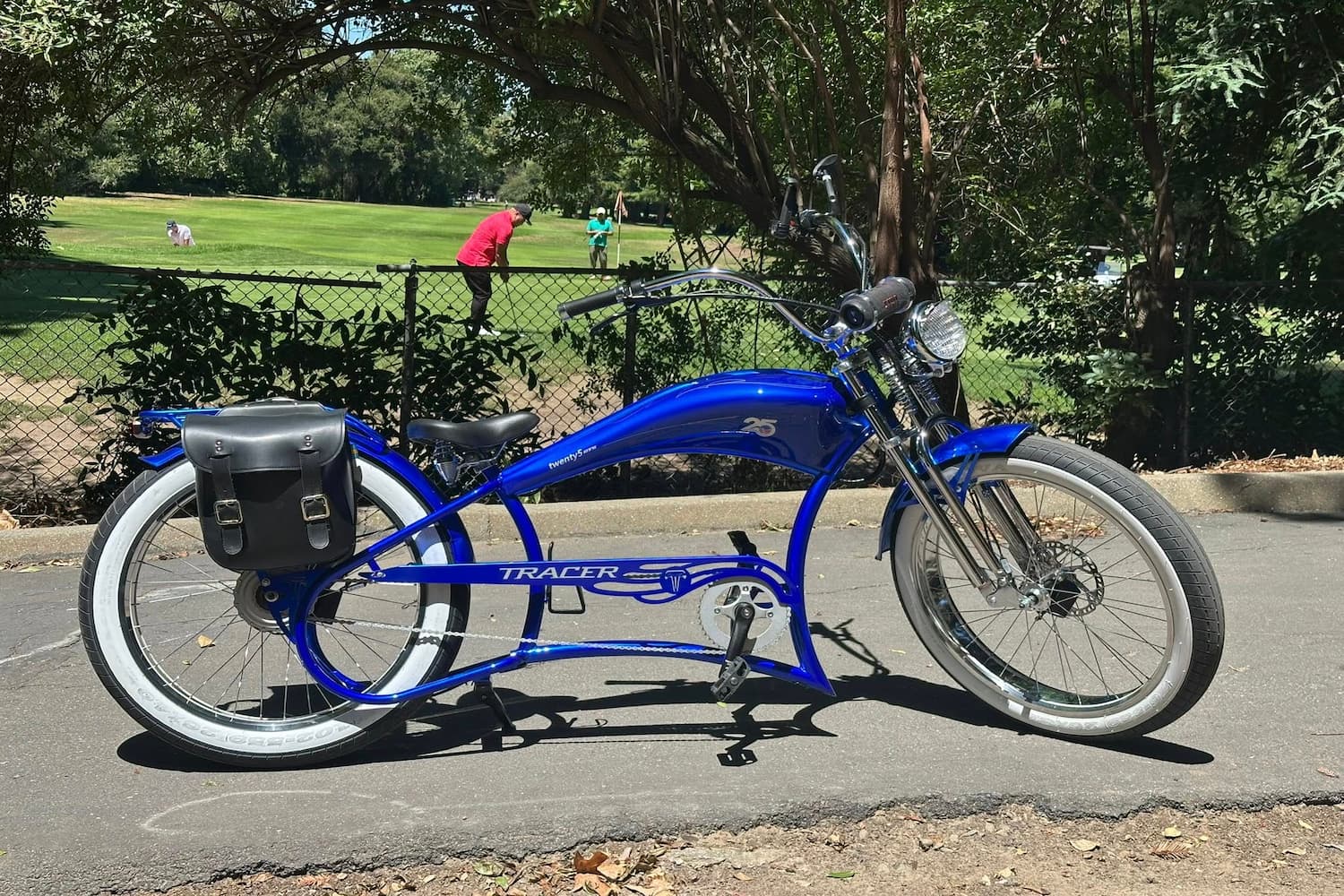
- Single-seater eBikes have compact seats but chopper-style or cruiser variants can also offer padded comfort for solo leisure rides.
3.4 Safety
- Two-seater eBikes: Longer wheelbase reduces tipping, equipped with larger brakes and often LED lights for visibility.
- Single-seater eBikes: Smaller size allows for easier navigation in traffic; brakes are sufficient for solo rides.
Verdict: Two-seaters are safer for passengers and children; single-seaters excel in crowded urban environments.
3.5 Storage & Portability
- Two-seater eBikes: Larger, not ideal for small homes or transport by car rack.
- Single-seater eBikes: Easier to store in apartments, elevators, or car racks; choppers require more space but are manageable in garages or sheds.
4. Cost and Maintenance
- Two-Seater eBikes: Higher initial cost due to larger frame, stronger motors, and reinforced construction. Maintenance may be slightly higher due to heavier components.
- Single-Seater eBikes: Lower cost and simpler maintenance; chopper-style models may require occasional cosmetic upkeep.
5. Recommended Models
5.1 Single-Seater Highlight: Tracer Raptor Pro DS
For solo riders seeking powerful, stylish, and agile rides, the Tracer Raptor Pro is a top choice.
It is suitable for:
- City commuting
- Solo coastal or scenic rides
- Riders who want personal style and performance
Key advantage: Combines strong motor and maneuverable frame for efficient solo riding.

5.2 Two-Seater Highlight: Raiatea 500W Tandem Electric Bike
For riders seeking shared adventure and comfort, the Tracer Raiatea 500W Tandem excels.
It is suitable for:
- Couples riding together
- Family outings or short errands
- Beach, boardwalk, or leisure cruising
Key advantage: Extended frame, dual seating, and robust motor for safe, enjoyable shared rides.
6. Decision Guide: How to Choose
6.1 When to choose a two-seater eBike
✔ You ride with a partner, friend, or family member
✔ You want higher load capacity
✔ Comfort is a priority for shared rides
✔ You plan to replace car trips with eco-friendly shared mobility
✔ Safety features for passengers are important
6.2 When to choose a single-seater eBike
✔ You ride alone most of the time
✔ You want easy storage and portability
✔ You need quick acceleration and agility
✔ You have limited budget
✔ You commute in busy city areas
6.3 When to choose a chopper-style single-seater
✔ You ride solo but value style and comfort
✔ You enjoy leisurely, scenic rides
✔ You have garage or storage space for a larger frame
✔ You want low-maintenance, single-speed simplicity
7. Future of Urban Mobility
Two-seater eBikes represent a growing trend toward shared mobility, offering:
- Perfect for couples; Riding together builds connection and shared experiences.
- Alternative to short car trips: Avoid gas, parking fees, and insurance.
- Family-friendly design: Extra-wide seats and stable frames make transporting children safe.
- High utility: Extra cargo capacity allows groceries, backpacks, and deliveries.
- Comfort-first: Suspension and ergonomic seating reduce fatigue on long rides.
Single-seaters continue to be indispensable for solo urban mobility, prioritizing flexibility, speed, and independence.
8. Real-Life Use Cases
|
Scenario |
Recommended eBike |
Reason |
|
Parent taking child to school |
Two-Seater |
Stability, extra space, safety |
|
Daily office commute |
Single-Seater |
Compact, fast, easy storage |
|
Weekend couple trips |
Two-Seater |
Shared experience, comfort |
|
Solo scenic ride |
Single-Seater (Chopper) |
Style, smooth ride, retro feel |
|
Dense city traffic |
Single-Seater |
Agile, easy to maneuver |
|
Food delivery |
Two-Seater |
Extra cargo capacity |
|
Solo leisure ride (style-focused) |
Single-Seater (Chopper) |
Comfortable cruising, retro design |
9. Final Verdict
The choice depends on your lifestyle and riding habits:
- Two-Seater eBikes: Best for families, couples, and shared rides
- Single-Seater eBikes (standard): Best for solo commuting and tight urban spaces
- Single-Seater eBikes (chopper style): Best for solo leisure rides with style and comfort
All three types excel in their niche. The right eBike aligns with your riding style, needs, and living situation.
FAQs
1.Do two-seater e-bikes need a stronger motor?
Yes. They typically use higher-torque motors (500W–1000W) to support two riders safely.
2. Does carrying two people reduce battery range?
Yes. Extra weight naturally decreases range, so a larger battery is recommended.
3. Are two-seater e-bikes harder to store?
They take up more space due to the longer frame. Single-seaters are easier for apartments.
4. Can I add racks or child seats to a two-seater e-bike?
Usually yes, as long as the bike supports the weight and mounting points.
5. Which is better for beginners?
Single-seater e-bikes—they’re lighter, easier to control, and more agile.

Leave a comment
This site is protected by hCaptcha and the hCaptcha Privacy Policy and Terms of Service apply.